◇ Enhance governance mechanisms for transparent and ethical decision-making and operations.
◇ Maintain a commitment to fair competition, regulatory compliance, and the fight against corruption.
◇ Advocate innovation, injecting new vitality into Kaifa's development and driving high-quality growth.

Kaifa is committed to creating a work atmosphere characterized by integrity, frugality, and ethical conduct. Honesty and trustworthiness are the core values of our company, and we firmly oppose corrupt practices and maintain a zero-tolerance policy towards any form of commercial bribery. We follow the Responsible Business Alliance (RBA) Code of Conduct and our own ethical guidelines, ensuring that we gather competitive information in a legal manner and refrain from any improper business activities. All departments and employees of the company shall not use their positions to accept or solicit gifts from enterprises or individuals who have business relationships with the company that may affect the normal performance of their duties. In 2025, there is no occurrence of breaches related to business ethics and code of conduct.


To strengthen integrity in our practices, Kaifa implements regular, surprise, and themed programs to promote integrity policies. We focused on providing targeted compliance training to key employees in critical areas and conducting legal education for all employees, including the training of anti-commercial corruption training, risk prevention training, integrity training, as well as the training on reporting and whistleblower protection system and the usage of reporting channel.
The company conducts hierarchical management of the integrity risk to all employees, and signs responsibility letters at all levels: first, the company's middle-level and above management personnel sign a integrity commitment letter; the second is that all management personnel sign the integrity and self-discipline commitment letter, and each new employee will sign the integrity and self-discipline commitment letter uniformly to achieve full coverage of the integrity and self-discipline commitments at key positions; the third is for the base level employees, the content of this regulation and employee manuals and other regulations on the management of employee integrity are compulsory for induction training, and the training results are evaluated; fourth, all branches and departments are required to organize training company-related regulation and publicity and implementation materials issued quarterly, so as to ensure that integrity education is publicized and implemented at all levels and fully implemented.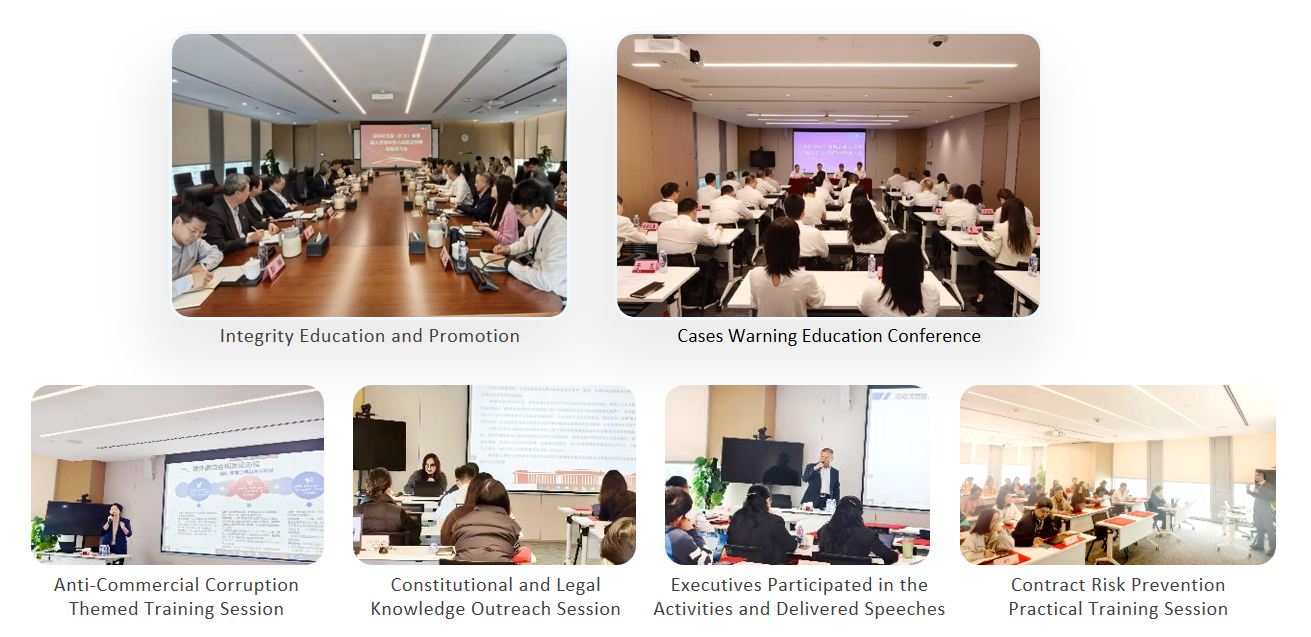
Kaifa has established a robust reporting system that includes defined Reporting Channels, a Confidentiality Principle, an Investigation Timeline, and a Whistleblower Protection Mechanism, allowing individuals to report openly or anonymously. We guarantee that individuals who report issues in good faith will be protected from any form of retaliation or discrimination.
Any instances or attempts of retaliation must be reported to the highest authority within Kaifa. Kaifa will take disciplinary measures against supervisors, managers, or individuals involved in retaliation or attempted retaliation, including termination of employment.
After preliminary review and examination, cases with minor circumstances or insufficient factual basis that do not warrant disciplinary action shall be closed; cases involving criminal offenses shall be transferred to judicial authorities; cases where disciplinary or regulatory violations are found and require investigation by the company's disciplinary inspection department shall be formally filed. For cases that have been filed and investigated, the company shall adopt appropriate measures based on the nature and severity of the circumstances, and make a decision or recommendation for disposition, including: criticism and education, circulated notice of criticism, admonishment talks, suspension, reassignment of duties, directive resignation, resignation assuming responsibility, demotion, and dismissal.

Kaifa complies with relevant laws, such as the Company Law and Securities Law of the People's Republic of China. With its unique business characteristics, Kaifa has established a comprehensive risk management framework that integrates a robust operational culture, strengthened internal control, and compliance risk management. We enhance internal audit supervision and implement a dynamic risk control mechanism that covers prevention, response, and control. This ensures proactive risk prevention, promotes stable operations, and facilitates high-quality development.
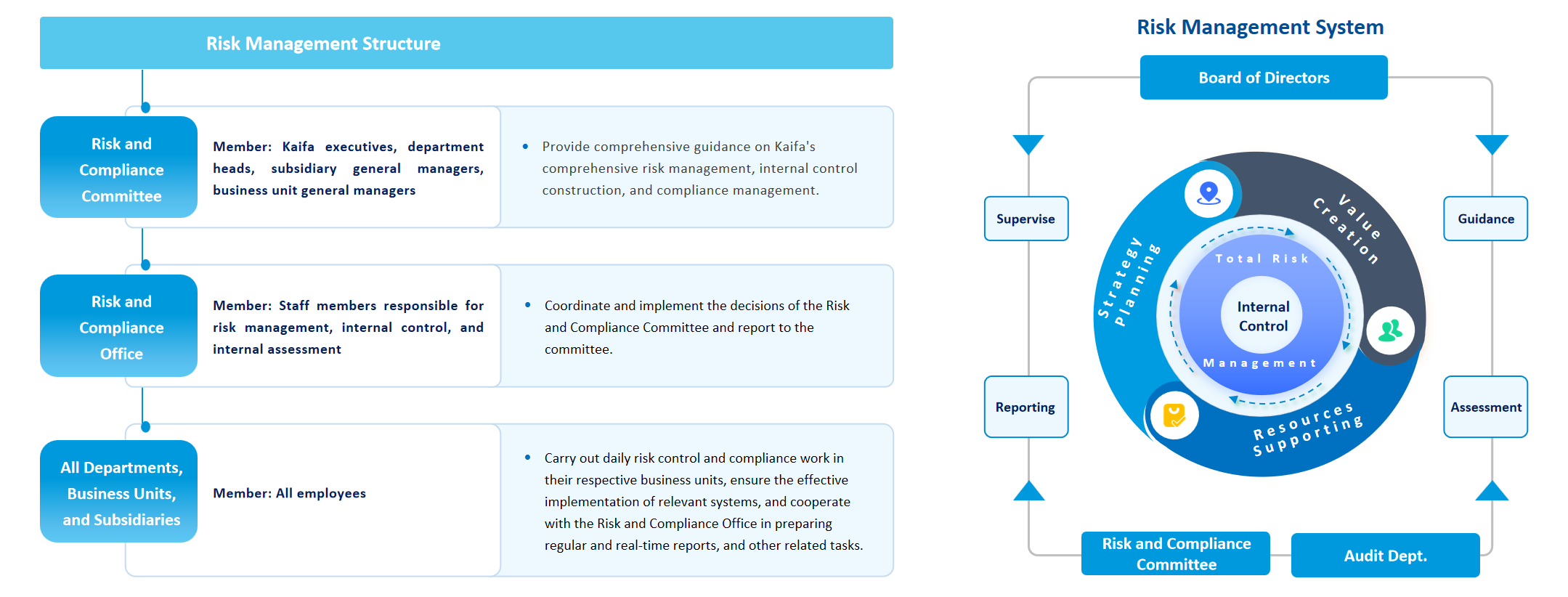




Kaifa has established a risk-oriented internal control system, which is anchored in business processes and designed to create a working system that suits our operations. Dedicated staff are responsible for planning, establishing, maintaining, and enhancing our working system. This system aims to align Kaifa's management system with external management frameworks, legal requirements, and internal management standards. It encompasses mechanisms such as management systems, roles, document guidelines, process digitization, and effective communication channels.
During the reporting period, Kaifa actively promoted process reviews across the entire organization. Each department conducted self-assessments to identify and resolve issues, with a focus on continuously improving the applicability and effectiveness of the processes. The on-site audit completion rate and identified improvement rate reached 100%. In alignment with Kaifa's strategic expansion into international operations, existing rules, procedures, and electronic documents were reviewed, translated into English, and verified by overseas employees to ensure their comprehension and compliance with rules and procedures.
Kaifa is committed to upholding regulatory requirements related to auditor independence and tenure. To ensure the objectivity and impartiality of audit results, proactive management measures are implemented to prevent mutual dependence between Kaifa and auditors. Annual audits are conducted by third-party institutions, and their findings and recommendations are comprehensively detailed in Kaifa's independent Internal Control Audit Report.
Kaifa is committed to fully complying with all tax laws and regulations of the countries in which we operate globally. We adhere to the transfer pricing rules of the respective countries, ensuring that profit allocation aligns with value creation and avoiding profit shifting to low-tax jurisdictions. We uphold the spirit of the law and principles of tax fairness. We believe that fulfilling our social responsibility by paying taxes supports governments in promoting local economic growth and pursuing sustainable long-term business operations.
Kaifa places great importance on tax transparency and adheres to international and local statutory disclosure obligations. We timely file tax returns and fulfill all tax payment obligations, taking responsibility for our tax affairs. Through the establishment of a unified financial management system, we ensure that inter-company transactions within the Kaifa group are conducted on an arm's length basis, aligning tax payments with income generation and refraining from engaging in malicious tax avoidance practices through tax havens.
To strengthen our tax governance, Kaifa has implemented robust internal tax processes and prioritizes tax risk management. Significant operational decisions involving tax matters are reported to the Board of Directors, accompanied by comprehensive tax analysis conducted by our internal tax team. Additionally, we engage external professional firms to provide expert advice when necessary.
The financial and tax responsibilities of Kaifa's management, including our corporate entity, are declared and reflected in the annual audit report, which is publicly disclosed by Kaifa. The report is signed by our corporate entity and the responsible financial management, obtaining confirmation from the auditing firm.
According to our Regulations on the Work of the Audit Committee of the Board of Directors, the Audit Committee is responsible for communication, supervision, and verification of both internal and external audits. It conducts at least one inspection and assessment each year of the establishment, effectiveness, and implementation of the internal control system, including financial and tax processes. The Audit Committee issues special opinions and reports to the Board of Directors, reviewing the annual audit report, including tax policies and implementation data, and providing written opinions

Innovative ideas and technologies are the key forces driving the flourishing development of the green industry. Kaifa organically integrates economic benefits with sustainable development, striving to achieve a synergistic win-win situation of economic, environmental, and social benefits. Kaifa relies on the integration of the IoT, big data, and artificial intelligence to accurately perceive and allocate resources, minimize energy consumption, strictly control pollutant emissions, ensure green and environmentally friendly industrial chains, and establish a comprehensive eco-friendly enterprise.
Guided by green principles, Kaifa has independently developed the Intelligent Factory Green Energy Management and Control System. By digitally upgrading energy management, it establishes monitoring and analysis, optimization control, and collaborative control.


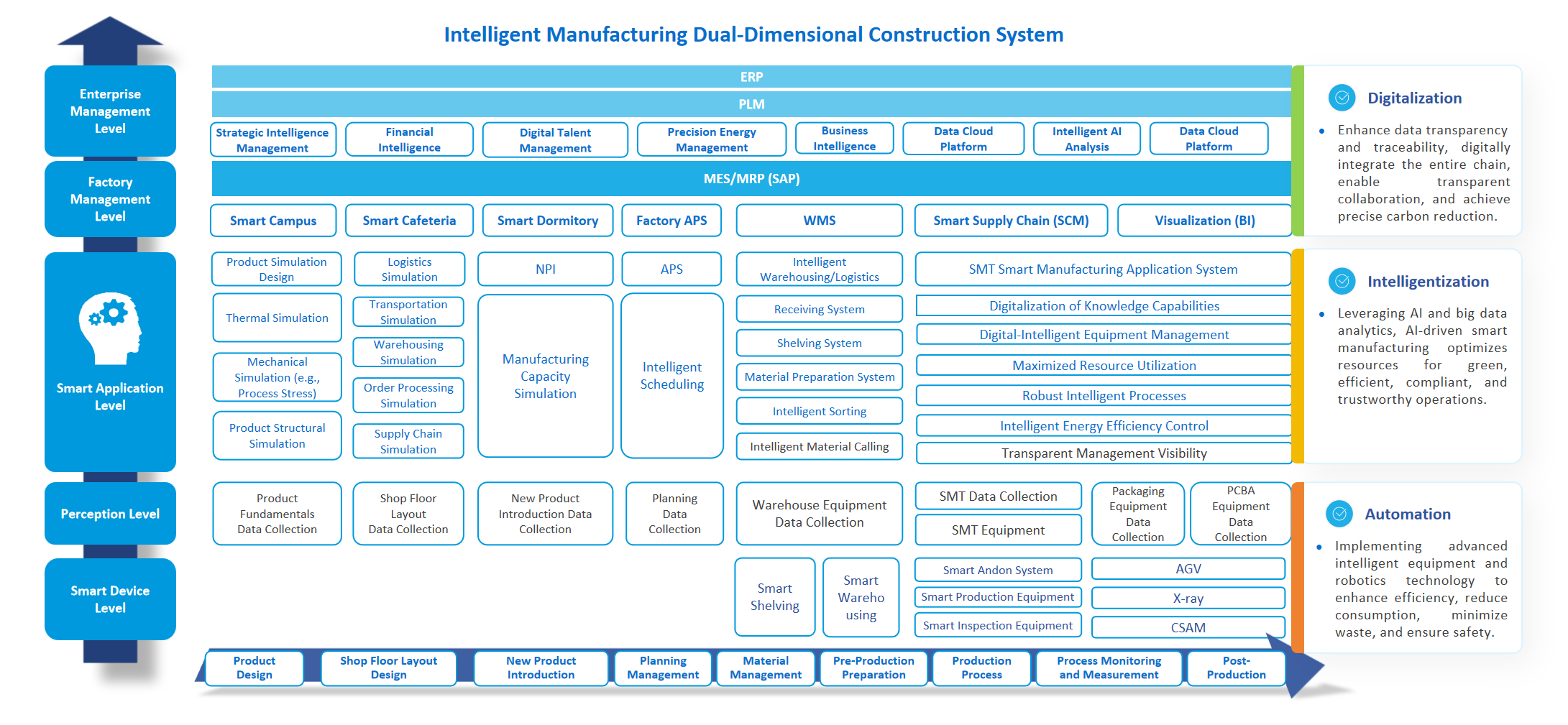
In the accelerating wave of Industry 4.0, intelligent manufacturing has emerged as the core driver propelling the global manufacturing sector toward green transformation and sustainable development. The company adopts a core strategy of deeply integrating digital, intelligent, and automated technologies to build an intelligent manufacturing system that combines efficient production, low-carbon operations, and social responsibility. We enhance digital management through end-to-end data connectivity across the entire industrial chain, improving information transparency and traceability. This data-driven approach enables transparent cross-process collaboration, providing quantitative support for precise carbon reduction. Leveraging AI algorithms and big data analytics, we empower intelligent decision-making to dynamically optimize resource allocation, achieving green efficiency and compliant, trustworthy operations. Leveraging smart equipment and robotics technology, we automate production processes, replacing high-energy-consumption operations to achieve multiple objectives: enhancing efficiency, reducing consumption, minimizing waste, and ensuring safety. This comprehensive approach demonstrates our commitment to sustainable development.
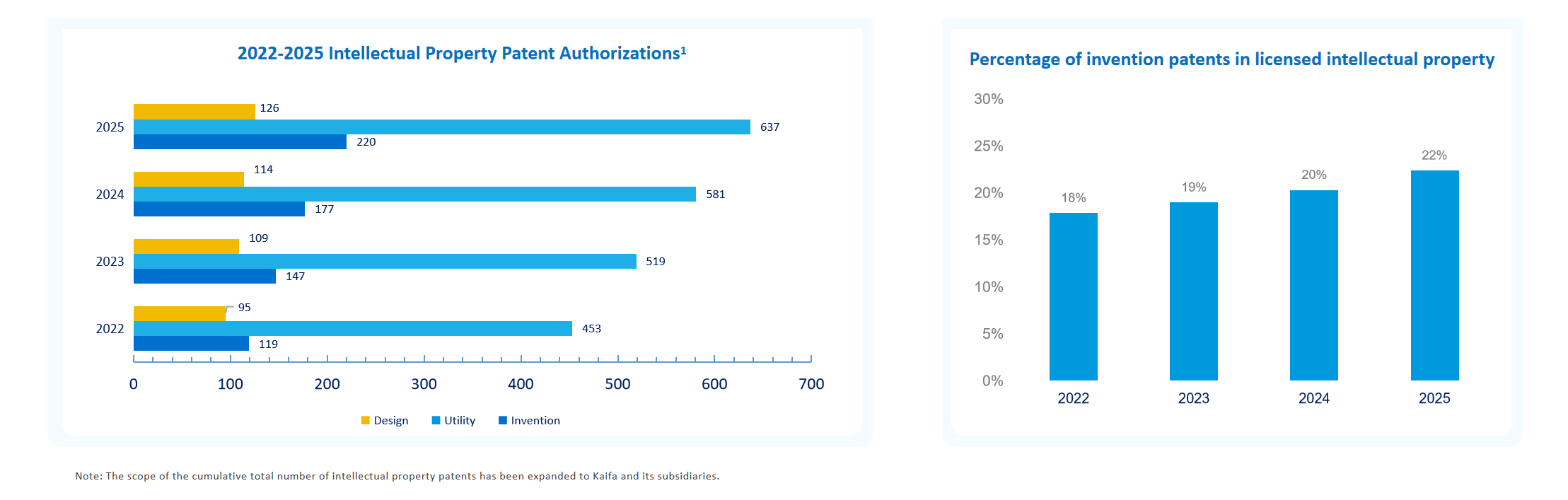
Intellectual property represents one of Kaifa's critical intangible assets. The company focuses on and systematically regulates patent portfolios across smart manufacturing, high-end process equipment, manufacturing techniques, and industrial product design. The company has elevated R&D quality, with the proportion of invention patents within its intellectual property portfolio increasing annually. Over the past four years, the share of invention patents at Kaifa and its domestic subsidiaries has risen from 18% to 22%. By the end of 2025, Kaifa and its domestic subsidiaries had filed a total of 1,805 patent and software copyright applications, with 983 patents granted cumulatively. By the end of 2025, Kaifa and its domestic subsidiaries had filed a total of 1,805 patent and software copyright applications, with 983 patents granted cumulatively.
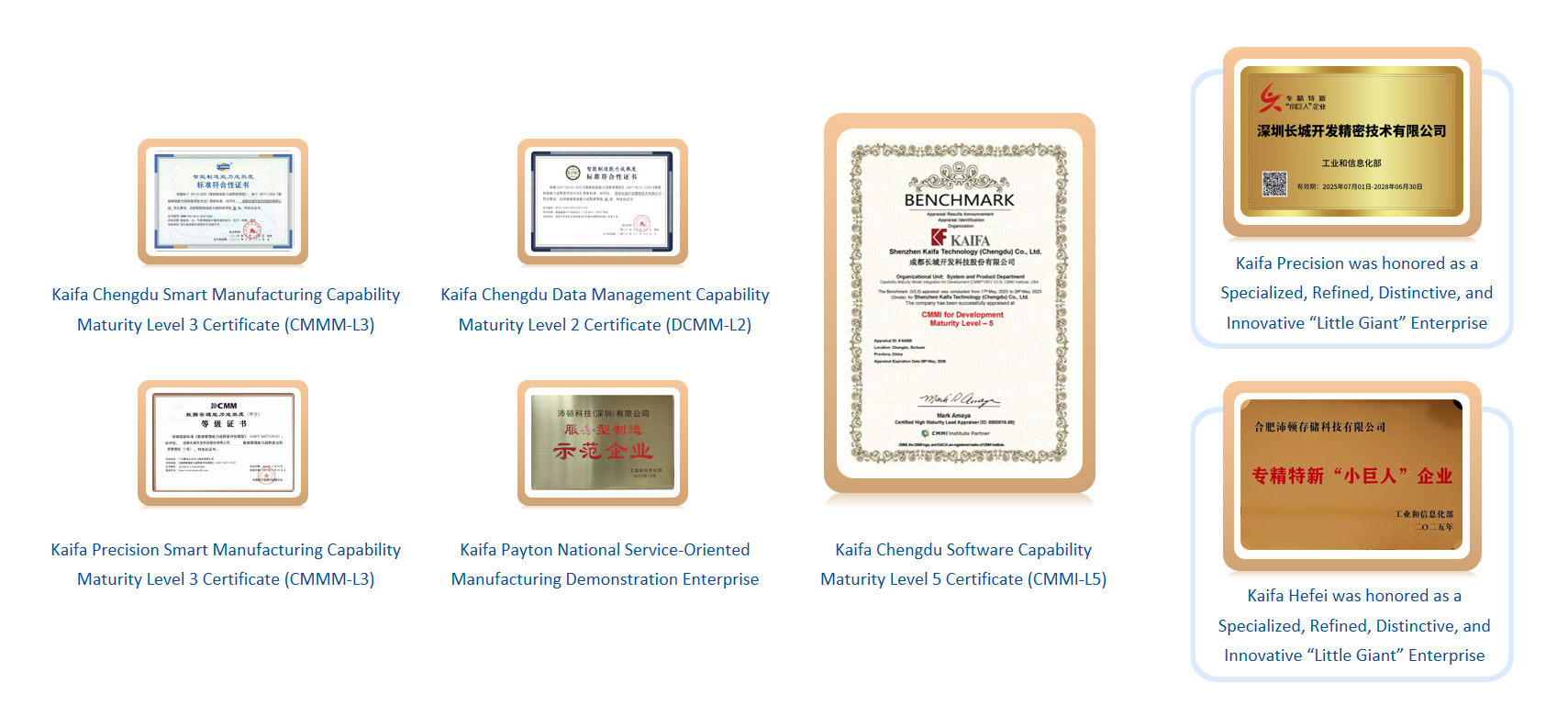
Kaifa is accelerating the industrial upgrade of manufacturing technologies across its three core business segments of storage semiconductors, high-end manufacturing, and metering smart terminals. It has formulated the “Digitalization and Smart Manufacturing Iteration Roadmap” to drive business-level investments in digital factory development and smart manufacturing technology upgrades. Kaifa Chengdu has obtained Software Capability Maturity Level 5 Certificate (CMMI-L5), Smart Manufacturing Capability Maturity Level 3 Certificate (CMMM-L3), and Data Management Capability Maturity Level 2 Certificate (DCMM-L2). Kaifa Payton has obtained an award of “National Service-Oriented Manufacturing Demonstration Enterprise,” while Kaifa Precision has obained Smart Manufacturing Capability Maturity Level 3 Certificate (CMMM-L3). In 2025, Kaifa Precision and Kaifa Hefei Payton were recognized as National Specialized, Refined, Distinctive, and Innovative “Little Giant” Enterprises for 2025.
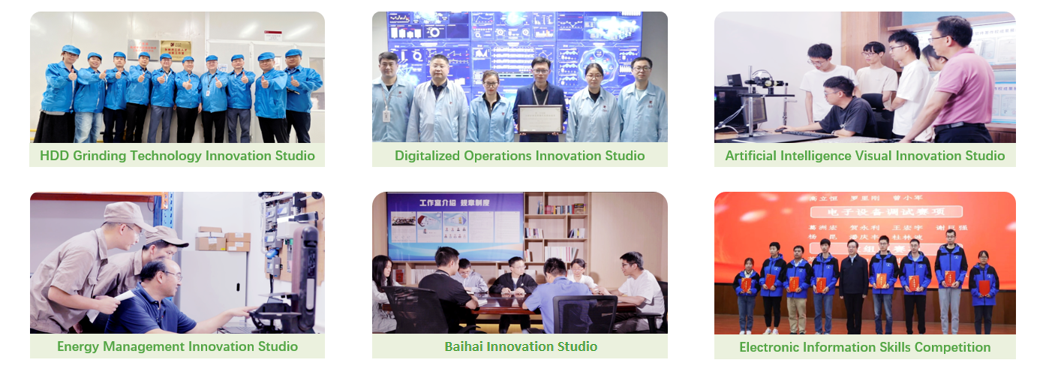
Kaifa establishes 8 employee innovation studios to play a mentoring role. Kaifa encourages employees to focus on national strategic needs, industry development trends, and efficient operation of the company, and to actively participate in the growth and development of the company's businesses. As of now, the studio has absorbed and cultivated 15 talents, carried out 171 projects, obtained 35 patents, and created economic benefits of nearly 50 million yuan. Among them, 3 studios have been awarded the title of Industry-level Model Worker and Craftsman Talent Innovation Studio.
We have established and refined management policies and processes for industry-academia-research collaboration and actively promoted the establishment of research and technological innovation centers in Shenzhen, Hefei, Chengdu. In past three years, Kaifa has actively invested in innovation platform, with certifications of three enterprise technology centers and national CNAS accreditation of two laboratories, providing support for corporate growth, external collaboration, compliance and testing reliability.
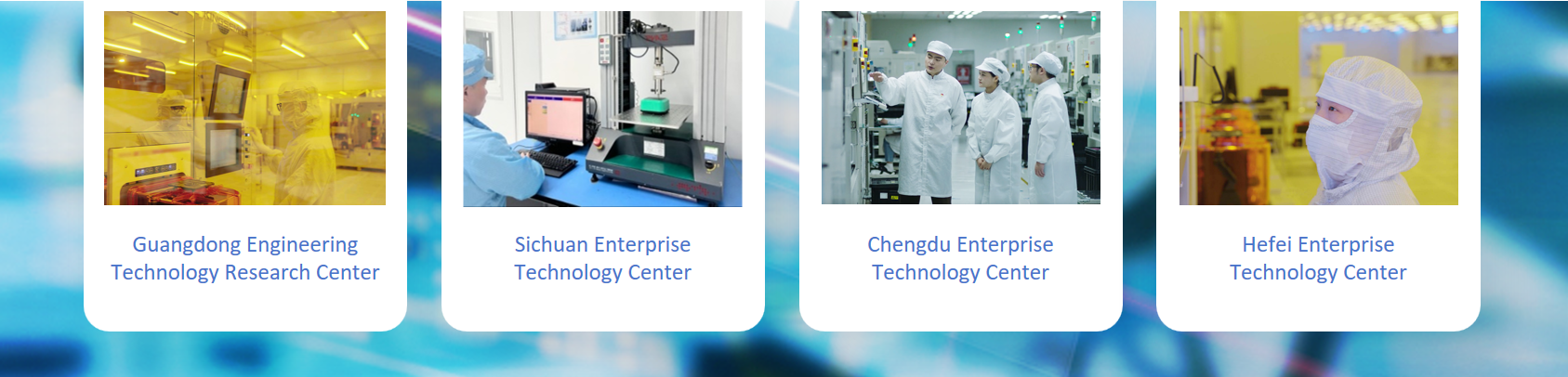
Kaifa is deeply engaged in electronic product manufacturing services, and consolidated in a high-end manufacturing environment and process control technology. In the field of ESD control, our technology has gradually been recognized by the domestic ESD, and we have actively strengthened technical exchanges and interactions within the industry. Kaifa has participated in the preparation of multiple national and industry ESD standards in conjunction with the China Electronics Standardization Research Institute and the China Electronic Instrument Industry Association, including three IEC 61340-5 series ESD international standards converted to national standards, one industry standard update, and one independent new national standard. As a manufacturing supplier of core components for hard drives, Kaifa participates in the formulation of domestic hard drive standards, expands into JDM product development services, and actively participates in and supports the activities of industry associations and societies.

Kaifa has established management requirements for product ecological design, applying a lifecycle thinking approach to consider the environmental impact factors of products, and reducing the adverse effects of products on the environment from the source. In order to reduce environmental pollution and improve the reusability of energy and materials, we fully consider the recyclability and upgrade functions of the product from product structure design, software design, hardware design, and manufacturing process, prioritize the selection of recyclable materials, and incorporate product reliability design requirements into the design specifications.

Kaifa adheres to the business philosophy of sustainable development and focuses on cultivating lean production capabilities. Since 2002, we have gradually introduced Six Sigma, industrial engineering, lean, and other tools to continuously improve our lean production management level. The company has established a lean production management system with maturity assessment as a long-term mechanism, guided by lean thinking, and built a cross-system and refined comprehensive information control platform. It effectively integrates lean and intelligent technologies, creates a lean automation production system for human-machine collaboration, and improves the level of intelligent manufacturing. We have trained lean production experts and built a lean learning culture that benefits everyone.
Kaifa provides comprehensive intelligent manufacturing technology support and builds a cross-system and refined integrated information control platforms and human-machine collaborative automated production system, to integrate lean thinking. Based on process standardization, we independently develop MES systems to finely control the five major elements of people, machines, materials, methods, and environment, promoting continuous optimization and solidification of processes. We eliminate information silos, with the MES system as the center, to achieve integration with SAP, BI, energy management, and other application systems, building an integrated information control platform for rapid discovery, analysis, and handling.


Guided by the development strategy, Kaifa started the Lean Intelligent Manufacturing Capability Enhancement 2.0 project in 2022, proposing a 'two-step' action plan. Based on the assessment scores of lean intelligent manufacturing, a lean improvement plan is developed for weak links to reach a 32.4% increase in the average assessment score by 2024, reaching a good level of L3. In 2024, multiple measures were taken to enhance the level of lean intelligent manufacturing, including personnel empowerment, implementation of improvement projects, and implementation of lean month activities. Re-assessment was conducted in 19 business units, and the lean maturity score increased by 9%, achieving the second phase goal.

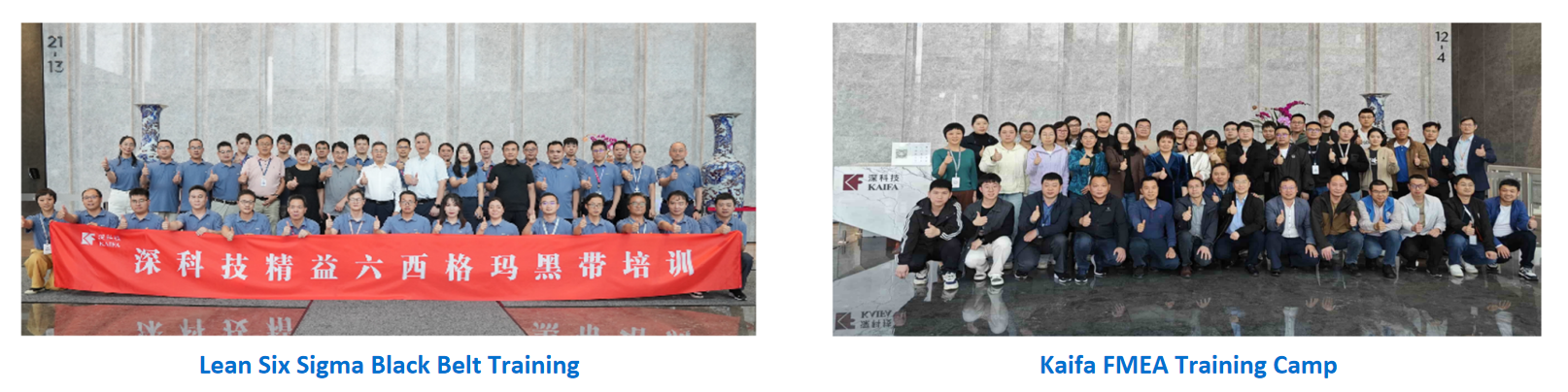
Centered on the “Lean Six Sigma Methodology” and themed “Lean as Foundation, Intelligence for Future,” the Black Belt training focuses on core areas including strategic and policy management, R&D design optimization, and digital tool application. Employing a “combined internal and external, tiered empowerment” model, 32 trainees systematically mastered Lean Six Sigma management tools and methodologies through an immersive program integrating “coursework + project implementation + cross-departmental collaboration.” They spearheaded over 20 Black Belt projects, delivering replicable benchmark cases that significantly enhanced the company's process optimization and operational efficiency.
Kaifa has consistently adhered to the philosophy of “Lean-driven, Quality First.” To advance the quality defense line and align with the 2025 Lean Planning objective of “shifting from quality firefighting to quality prevention,” Kaifa organized a three-day specialized training on “Failure Mode and Effects Analysis (FMEA)” for 33 key employees from process and quality departments across various business units. This initiative aims to enhance employees' understanding and application of quality management tools, further driving continuous improvement in product quality.
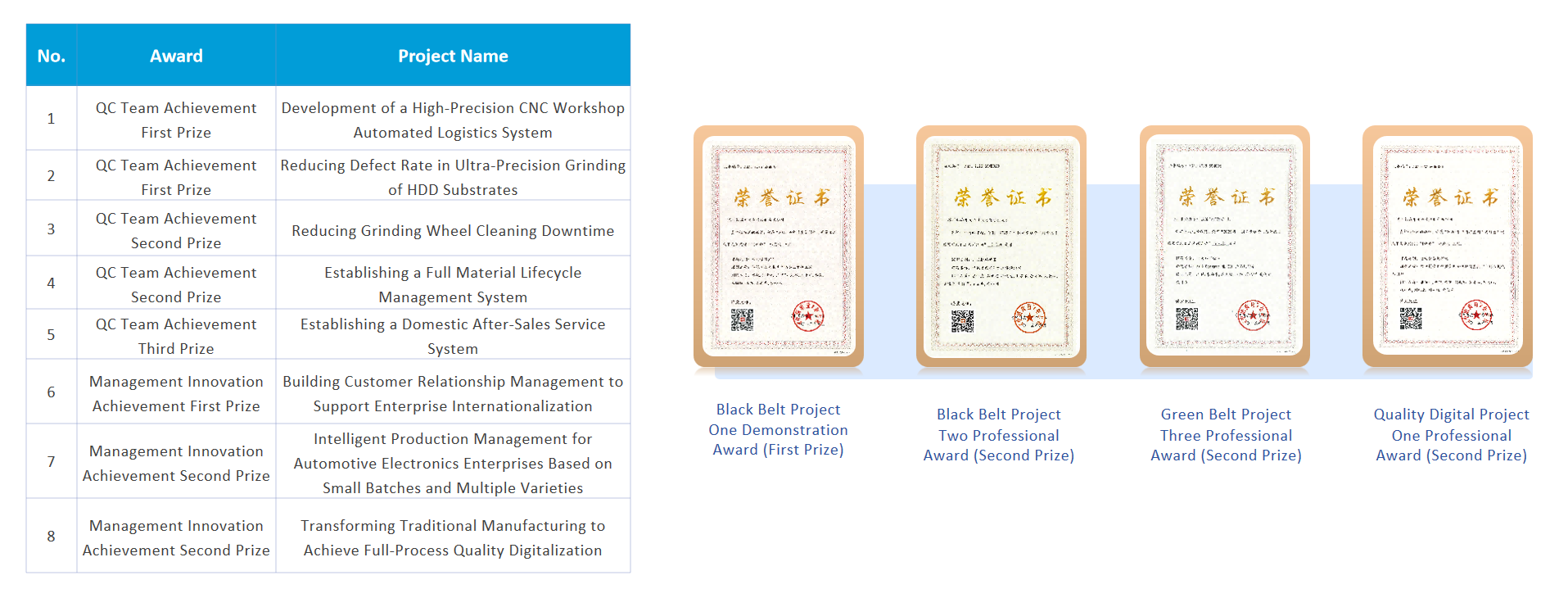
Kaifa has cultivated its Lean Six Sigma management system for over two decades. This system has long transcended traditional tools, evolving into the cultural core of the company's core values and continuously driving the advancement of corporate governance capabilities. Through systematic, long-term implementation, the company has not only established efficient and standardized production and operational processes, significantly enhancing product quality stability and compliance, but also built a comprehensive talent development system. This system continuously cultivates a core workforce equipped with professional expertise, innovative thinking, and a strong sense of responsibility, contributing greater wisdom and strength to the company's sustained development and the advancement of the industry. In 2025, Kaifa received multiple authoritative industry awards. This recognition not only affirms the effectiveness of the company's Lean Six Sigma management but also fully acknowledges the entire workforce's commitment to excellence in governance. It further exemplifies Kaifa's unwavering spirit of “pursuing excellence and embracing innovation”—where quality is regarded as the lifeline of the enterprise, and superior quality earns customer trust and market recognition.
Kaifa closely adhered to the strategic core of 'Unity and Excellence', and successfully held the Lean Month event. This event is not only a comprehensive review of the company's lean manufacturing capabilities and quality culture construction, but also a profound response to customer needs and employee development. Overseas factories organized the Lean Month activity for the first time and got great support and reaction. During the activity, the President Assistant and BU leaders shared lean knowledge and management's support for lean tools and culture. The Lean Six Sigma Green Belt and Lean Tool Training are extended to overseas subsidiaries to enhance the lean capabilities of overseas employees, and effective incentive measures are implemented to promote full participation. Material rewards and spiritual incentives are given to selected outstanding projects of Green Belt, rapid improvement, and employee proposals.


