◇ Prioritize the physical and mental well-being of employees by ensuring a supportive work environment, fair compensation and benefits, and equal opportunities for professional growth.

◇ Value employee development by providing personalized learning and development plans.

◇ Actively fulfill social responsibilities through active participation in charitable initiatives.

◇ Foster strong partnerships with employees, customers, and suppliers to cultivate shared value and foster mutual success.

Key Performance
  • Human Rights Protection
    Event of child labor 0
    Event of minors engaging in hazardous work 0
    Event of forced labor 0
    Event of employee discrimination 0
  • OHS Management
    ISO45001 system certification rate 100 %
    Rate of signing safety production responsibility agreements 100 %
    Number of newly reported occupational diseases (from 2016) 0
    Lost work hours rate per million work hours 0.0076 %
    Rate of lost work hours incidents per million work hours 0.25 times
  • Employee Structure
    Percentage of minority employees 14.9 %
    Percentage of female employees 32.4 %
    Percentage of non-local employees 10.1 %
  • Employee Union
    Coverage rate of employees under collective contracts in China 100 %
    Comfort employees in difficulties (in recent five years) 268
    Amount of support provided to employees in difficulties (in recent five years) ¥640,000
  • Welfare and Benefits
    Coverage rate of departmental employee representatives 100 %
    Response rate to employee representative opinions 100 %
    Employee satisfaction rate 3.97
    Ratio of employee performance and development assessment 100 %
    Coverage rate of welfare programs 100 %
    Ratio of retirees enjoying benefits 100 %
  • Training
    Total training hours 146,842
    Training coverage rate 90 %
    Training satisfaction rate > 95 %
    Number of active trainers 237
    Employee Average Training Hours 35.7
    Number of newly developed courses 200
  • Human Rights Protection
    Event of child labor 0
    Event of minors engaging in hazardous work 0
    Event of forced labor 0
    Event of employee discrimination 0
  • OHS Management
    ISO45001 system certification rate 100 %
    Rate of signing safety production responsibility agreements 100 %
    Number of newly reported occupational diseases (from 2016) 0
    Lost work hours rate per million work hours 0.0054 %
    Rate of lost work hours incidents per million work hours 0.03 times
  • Employee Structure
    Percentage of minority employees 14.1 %
    Percentage of female employees 32.9 %
    Percentage of non-local employees 7.2 %
  • Employee Union
    Coverage rate of employees under collective contracts in China 100 %
    Coverage rate of departmental employee representatives 100 %
    Response rate to employee representative opinions 100 %
  • Welfare and Benefits
    Coverage Rate of Employee Social Insurance 100 %
    Percentage of Staff Granted of Equity Incentive Recipients 100 %
    Employee satisfaction rate 4.06
    Ratio of employee performance and development assessment 100 %
    Coverage rate of welfare programs 100 %
    Ratio of retirees enjoying benefits 100 %
  • Training
    Total training hours 160,073
    Training coverage rate 90 %
    Training satisfaction rate > 95 %
    Number of active trainers 280+
    Employee Average Training Hours 36.01
    OHS Training Coverage Rate 100%
Key Measures to Prohibit Child Labor
Employee Recruitment: Strictly adhere to guidelines, such as the Operator Recruitment Process Guide and the Management Methods for Labor Service Cooperative Units in Operator Recruitment, explicitly prohibiting child labor. Employ measures like interviews, resume verification, and identity validation to prevent the recruitment of child labor.
Supply Chain and Partnerships: Ensure compliance with our Supplier Code of Conduct, which explicitly prohibits the use of child labor, for suppliers and partners. Regularly review and assess their adherence to these guidelines.
Review and Audit: Conduct internal and supply chain audits to ensure regulatory compliance. Engage in third-party inspections and certifications for transparent and credible supply chains. Establish a reporting mechanism to encourage employees to report any child labor incidents, protecting us from its impact.
Training and Education: Promote awareness of child labor issues within Kaifa and among supply chain partners, emphasizing our policies and standards against child labor. Provide targeted training and education to suppliers to enhance their understanding and management capabilities regarding child labor.
Key Anti-Discrimination Measures
Training and Audits: Conduct regular training to enhance employees' understanding of anti-discrimination principles and raise awareness of related issues. Ensure suppliers comply with our Supplier Code of Conduct, including anti-discrimination requirements. Conduct periodic social responsibility audits and, if necessary, third-party audits to prevent discrimination incidents in the supply chain.
Development of Female Employees: Create a gender-equal work environment, empowering female employees to leverage their strengths and contribute to team management and technological innovation. Address challenges they may face, provide necessary support, implement equal pay, and enforce policies such as paid marriage leave, maternity leave, breastfeeding breaks. Offer additional benefits such as free gynecological examinations, dedicated spaces for working mothers, and organize activities to reduce work stress and enhance work-life balance.
Empowering Persons with Disabilities: Foster an inclusive workplace that provides equal employment opportunities for persons with disabilities. Offer suitable positions and ensure their welfare needs are met, while fulfilling our corporate social responsibilities.
Key Measures to Prevention of Forced Labor

We prioritize human rights protection and risk management, adhering to a "transparent, fair, and equal" employment policy that ensures no discrimination based on race, color, religion, gender, nationality, ethnicity, age, disability, or marital status in recruitment, selection, disciplinary actions, employee development, compensation and benefits, and termination of labor contracts.

Development History of Occupational Health and Safety Management


View Kaifa System Certification

Safety Vision


Safety Objectives

Safety Values

Kaifa Topic Groups
Kaifa has developed its training system with a core focus on empowering employees and supporting the business. To leverage organizational experience, we cultivate internal experts and key talents in specific positions. Since 2022, Kaifa has established multiple topic groups to drive specialized initiatives.

Training Program: Leadership - Initiation
In 2023, we introduced the "Initiation" leadership training camp specifically designed for newly appointed managers. This program adopts an innovative approach by combining online and offline training formats. It integrates various learning methods, including online courses, practical exercises, interactive online communities, and offline knowledge sharing, to facilitate practical application and action-oriented transformation. The program covers a wide range of topics, including management skills, professional expertise, and overall competencies. It incorporates engaging training activities and practical assignments to ensure effective learning outcomes and the successful application of acquired knowledge.
Advanced Training on Sustainabiltiy
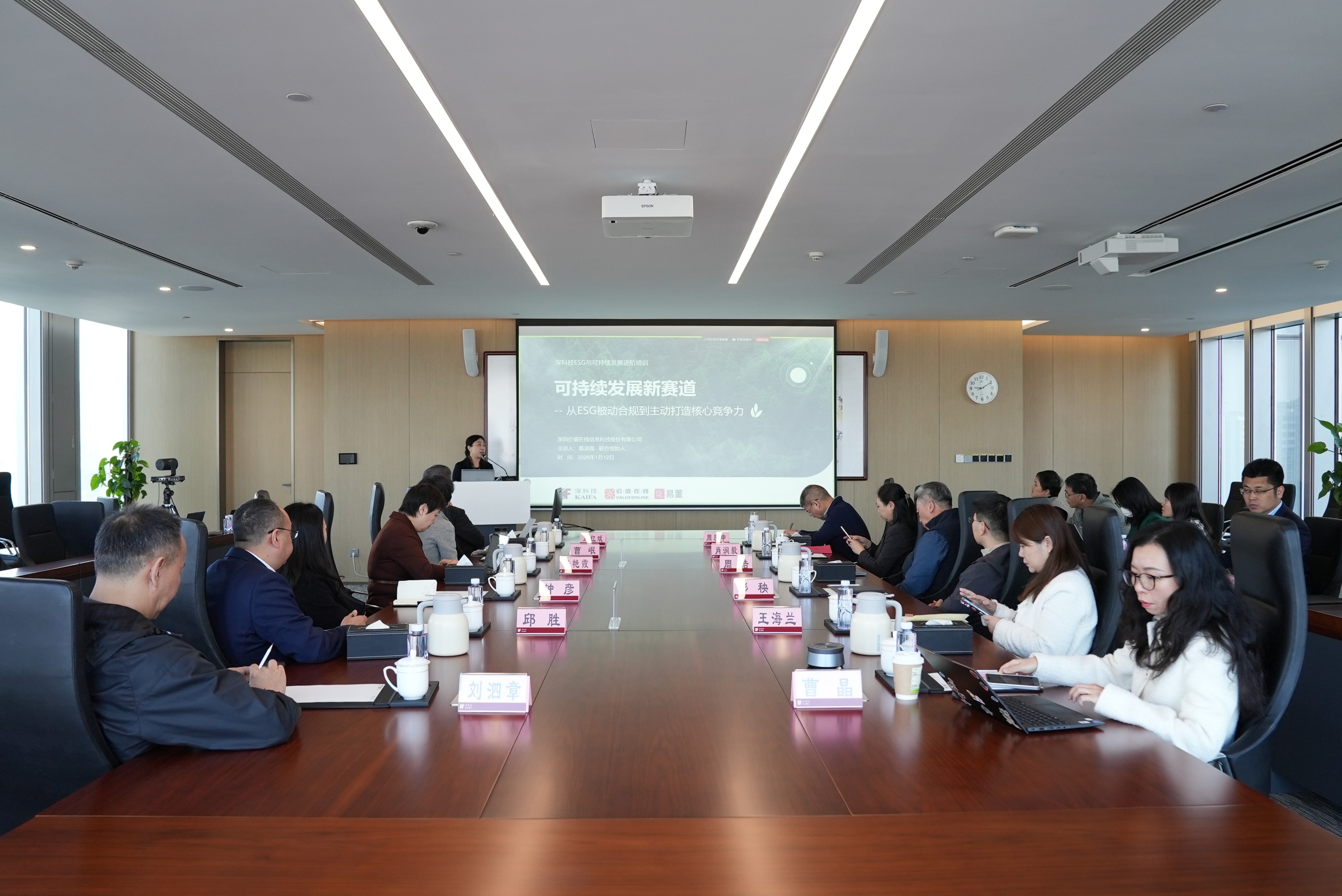
To align with the green development strategy, comply with global and national ESG regulations, meet the sustainability demands of domestic and international markets and customers, strengthen the foundation of sustainability governance, and promote integration between ESG and business operations, Kaifa has engaged experts to deliver advanced sustainability training for board members, management, executive teams, and relevant employees. The core curriculum covered ESG policy developments and market trends, the revaluation of ESG value and its strategic importance, as well as case studies of leading ESG companies and key improvement pathways. This initiative empowers management to adopt a systematic approach in sustainability strategies, transforming ESG into a core competitive advantage, and positioning Kaifa to seize opportunities in green transformation and global expansion.
Empower Training on Addressing Cliamge Change
Kaifa closely follows the ESG trends and is committed to promoting the strategic implementation of green transformation and low-carbon development. In order to further enhance the employee awareness of climate change, energy conservation, and carbon reduction, and improve their professional ability in greenhouse gas inventory, Kaifa has hired senior lecturers from external institutions to conduct a three-day greenhouse gas awareness training and ISO14064-1 standard internal auditor training for leaders, employees, and internal auditors.
Empowered by Internal Instructors
Kaifa owns a stable and excellent internal team of instructors, actively accumulating and inheriting organizational experience and corporate culture, effectively supporting the implementation of company strategies, assisting businesses, and providing strong support for talent cultivation and talent team construction. By continuously selecting and cultivating a group of core management and technical experts into the instructor team under the project mode, Kaifa organizes activities such as lecturer empowerment, co-creating courses, and trial teaching, independently develops and launches the company's internal TTT training course (Training the Trainer to Train), comprehensively improves the lecturer's abilities in course development and interactive teaching, and creates good teachers and courses.
Yangfan Reserve Cadre Training Program
While extensively recruiting students from top-tier schools, Kaifa has carefully crafted and continuously optimized the Yangfan Reserve Cadre Training Program. During the three-year training period, we have established a progressive training path in stages and systematically assisted the reserve cadre in improving their the general literacy and professional abilities through immersive training, practical project practice, mentor guidance, exchange and mutual learning. Meanwhile, we aim to create a fair talent evaluation platform, regularly launch evaluations with special honors and incentives, establish an excellent talent pool, and rapidly advance the growth of outstanding young talents. This program not only reserves backbone forces for the long-term development of the company, but also strives to promote the continuous optimization and healthy development of the talent structure, achieving common achievements between young employees and the company.
Process Efficiency Training Camp
In order to build a systematic system and methodology of employee process thinking, focus on process optimization and alignment with business value, and solve core pain points such as unclear process concepts, scattered optimization, inconsistent standards, and lack of closed loops, Kaifa carred out a serie of process management empowerment training on "Benefits from Process Optimization" in 2025. Guided by problems and centered on values, it not only helps employees master the full process methods of process diagnosis, optimization, design, and governance, but also promotes the deep integration of process thinking into business scenarios, providing solid talent support and methodological guarantees for enterprises to improve process operation efficiency and maximize business value.
Yunfan Action Training Camp
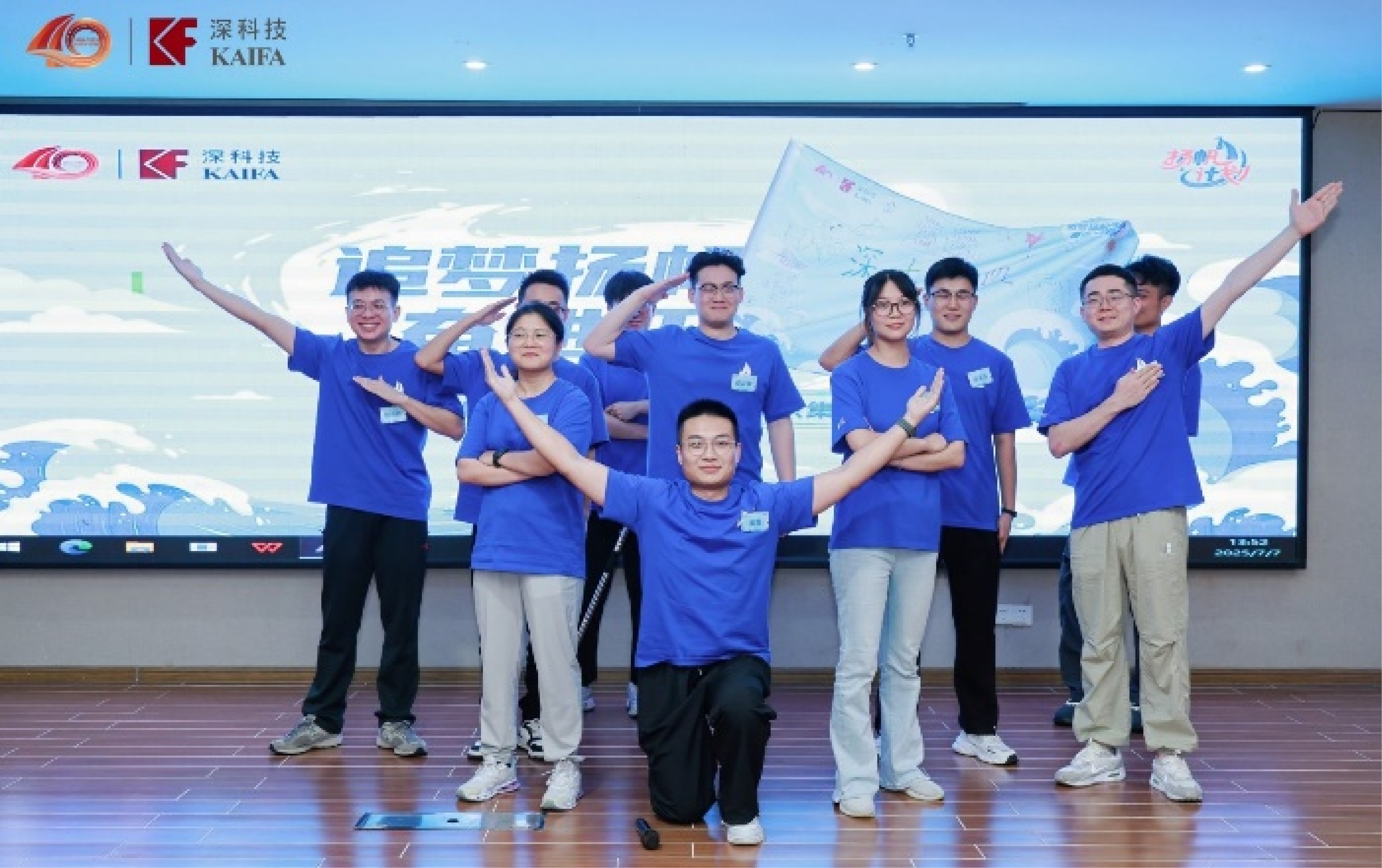
The Yunfan Action Training Camp is launched to further lead the young experts to take on responsibilities and make breakthroughs by focusing on goal management, client awareness, team management, innovative thinking, business awareness, and decision-making. We carry out an approach with a combination of training and practice to help students strengthen their cognitive ability and continuously create value for the company by stimulating energy through thinking, enhancing creativity through breakthroughs, and gaining strength through collaboration.
ESG Capability in Supplier Full Process Management
Supplier management is an important part of deepening ESG work for enterprises. Through selection of excellence, promotion of improvement, and common growth, a supplier resource pool with good environmental performance, social responsibility, and corporate governance is built to reduce supply chain risks and enhance overall sustainable development and competitiveness.


Supplier Risk Management Measures
Kaifa, in collaboration with its suppliers, is dedicated to promoting the sustainability of the entire value chain. We have established comprehensive processes for supplier lifecycle management and supply chain risk management. We strengthen our management of conflict minerals and social responsibility by imposing rigorous requirements and providing communication and training. Through these efforts, we collectively enhance the sustainability of the supply chain.


Conflict Minerals
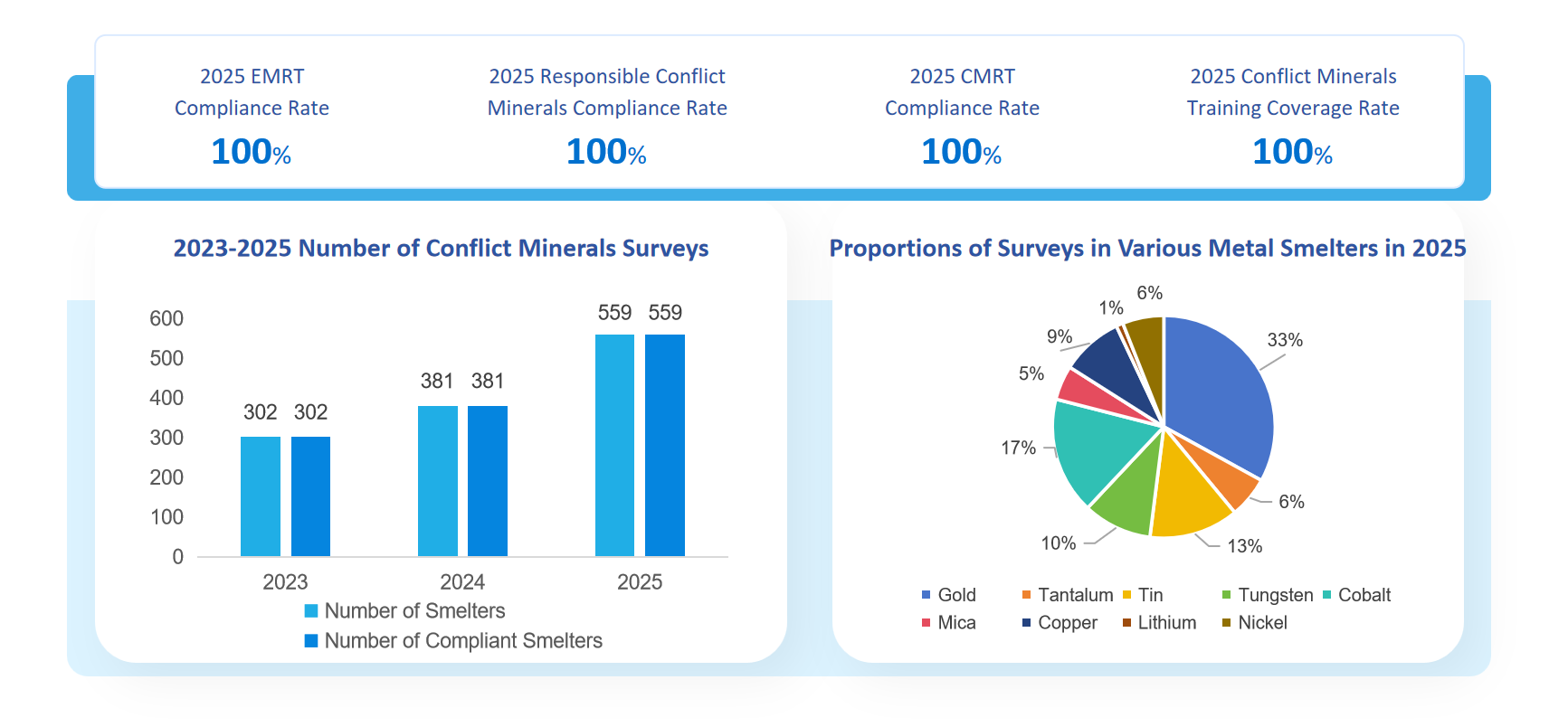
Kaifa is dedicated to refraining from procuring materials that contain conflict minerals, including tungsten, tin, tantalum, gold, cobalt, mica, and other minerals from conflict-affected and high-risk regions. We conduct thorough due diligence investigations to prevent the exacerbation of environmental damage and human rights violations through mineral trade, thereby making a meaningful contribution to sustainable, equitable, and effective development.